
It's Not You — It Might Be Your Machine
When something goes wrong on a knitting machine, most knitters assume they did something wrong. Sometimes that's true - but many times the machine just needs a quick check.
The 60-Second Reset
- Re-thread the yarn in the tension unit and carriage and make sure it feeds smoothly.
- Reset the carriage to plain knitting Basic stitch formation on knitting machine (without any stitch pattterns) settings.
- Test 10 rows with a smooth "known good" yarn.
You'd be surprised how often that alone fixes the problem.
5 Things to Check Before Blaming Your Machine
Yarn Path
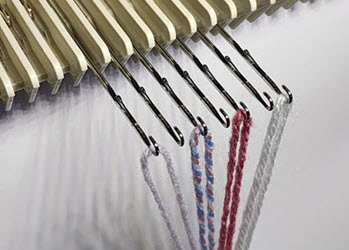
If the yarn snags or feeds unevenly, the machine can't form consistent stitches. Even a small twist in the tension unit can cause dropped stitches.
You're looking for: yarn that feeds unevenly, jerks while knitting, or suddenly tightens.
Quick test: Pull the yarn gently and watch the full path to the needles.
Needle Movement
Every needle should slide freely. One sticky or bent needle can cause problems in the same spot again and again.
You're looking for: a needle that feels sticky, bent, or doesn't slide as smoothly as the others.
Quick test: Slide the needles by hand and feel for resistance.
Sponge Bar Pressure
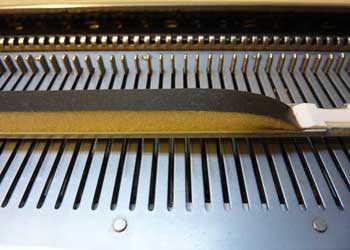
A worn sponge bar Sponge strip that holds the needles in position for knitting. is one of the most common causes of mysterious knitting issues. If needles feel loose, the machine can't hold stitches reliably.
You're looking for: needles that feel loose, sit lower than normal, or don't stay firmly in position.
Quick test: Do the needles sit firmly in position?
Carriage Settings
Sometimes a patterning setting is left on accidentally. One tiny lever can completely change how the machine knits.
You're looking for: a Tuck Textured stitch pattern where individual stitches do not knit and the working yarn travels OVER selected stitches for 1-4 rows , Slip Textured stitch where the working yarn passes under selected needles (slip) , or Hold Needle position E - D depending on brand (pulled all the way out) button that may have been engaged accidentally.
Quick test: Reset everything to plain knit settings and try again.
Yarn Compatibility
Not every yarn behaves well on a knitting machine. Thick, fuzzy, or uneven yarns can create trouble even when you're doing everything right.
You're looking for: yarn that is fuzzy, uneven, thick, or hard for the machine to pull consistently.
Quick test: Try a smooth "known good" yarn to see if the problem disappears.
Remember This
You didn't break your machine — and you're not alone.
Machine knitting has a lot of moving parts. Most issues come down to yarn flow, needle movement, or a setting that's easy to overlook.
Still stuck?
If none of the above solved the problem, it might be time for a pro to take a look. I keep a running list of known repair shops if you need a place to start.