
Lesson 2: Yarn and A Bit More Tech
Yarn and Tension
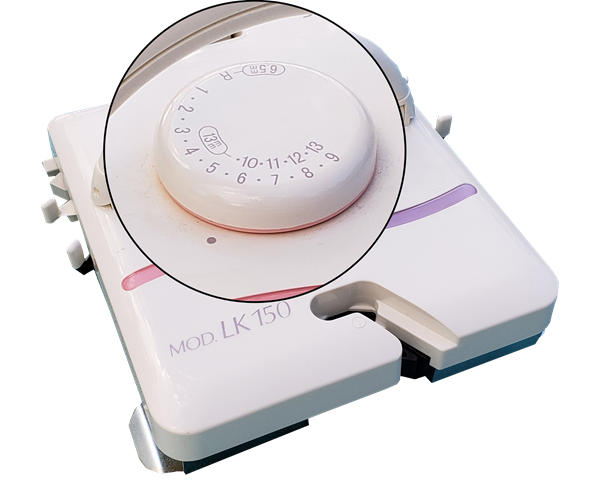
Stitch Dial |
Another of the many features of the LK-150 is its ability to knit a wide range of yarn weights. When you knit, the weight and drape of the resulting fabric is determined by the Stitch Dial or Tension Dial. These control the flow of the yarn through the carriage and the size of the resulting stitch. If you are a hand knitter, think of it this way: a larger needle will produce a large stitch, and therefore a more open knitted fabric. With the LK-150 you can use a fine yarn, think of a sock weight yarn or a #1. At the opposite end of the spectrum, you can use a medium #4 weight yarn and create a hand-knit look. For heavier yarns, you even have the option of knitting over every other needle. Also, the weight of the yarn impacts the size of the stitch and the finished appearance of the knitted fabric. Because of the size of the hooks, the distance between the hooks, and the setting of the tension dial, you can create very different fabrics even in plain stockinette knitting. The size of the hook of the needle determines the thickest yarn you can use. If a bulky yarn, or a hand-spun yarn, does not fit in the hooks of the needles, the yarn splits and the stitches do not form properly. Carriage Stitch/Tension Dial = Similar to hand knitting needle size. (not equal to HK needle sizes) Mast Tension Dial = the tension a hand knitter applies to the yarn with their fingers. |
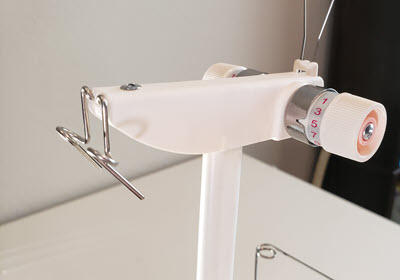
Tension Dial |